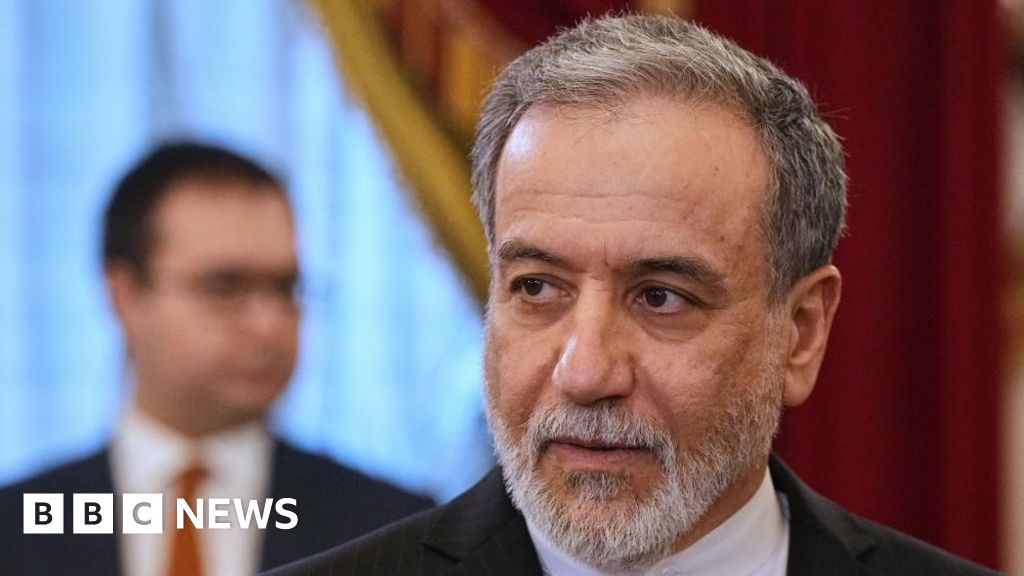
Iran's Foreign Minister Abbas Araghchi accused the US of choosing military escalation whenever diplomacy appears possible, posting on X that Iranians "never bow to pressure." The statement came after exchanges of fire in the Strait of Hormuz, where US Central Command said it destroyed Iranian missiles, drones, and small boats while disabling two oil tankers attempting to breach the US naval blockade. Despite the clashes, President Trump insisted the ceasefire remains intact. The US has maintained a blockade of Iranian ports since February to pressure Tehran into accepting terms to end the war that began with US and Israeli strikes. Some 20% of global oil and LNG shipments pass through the strait, whose partial blockage has already driven prices higher.
The US and Israel launched strikes against Iran in February 2025, triggering a conflict that has seen Iran attack Gulf allies and control the Strait of Hormuz. A ceasefire framework exists to enable talks, but both sides have continued military operations while claiming the other violates agreements.
Russia and Ukraine traded accusations of ceasefire violations within hours of separate truces meant to cover Victory Day celebrations. Russia's defense ministry reported over 1,000 violations including 887 drone strikes and 153 artillery attacks, while Moscow's mayor said some 20 drones were downed near the city. Ukraine's President Zelensky countered that Russia launched more than 140 attacks and 850 drone strikes in the truce's first hours, stating there was "not even a simulated attempt" to stop fighting. The dueling ceasefires—Russia's for May 8-9, Ukraine's proposed indefinite truce starting May 6—have collapsed into continued violence. Russia has threatened massive missile strikes on Kyiv if its Victory Day parade in Red Square is attacked, warning foreign diplomats to leave the capital.
Victory Day on May 9 marks the Soviet defeat of Nazi Germany. Russia holds elaborate military parades; this year hardware was removed from Red Square over security fears. Ukraine has repeatedly targeted Russian military and infrastructure with long-range drones.
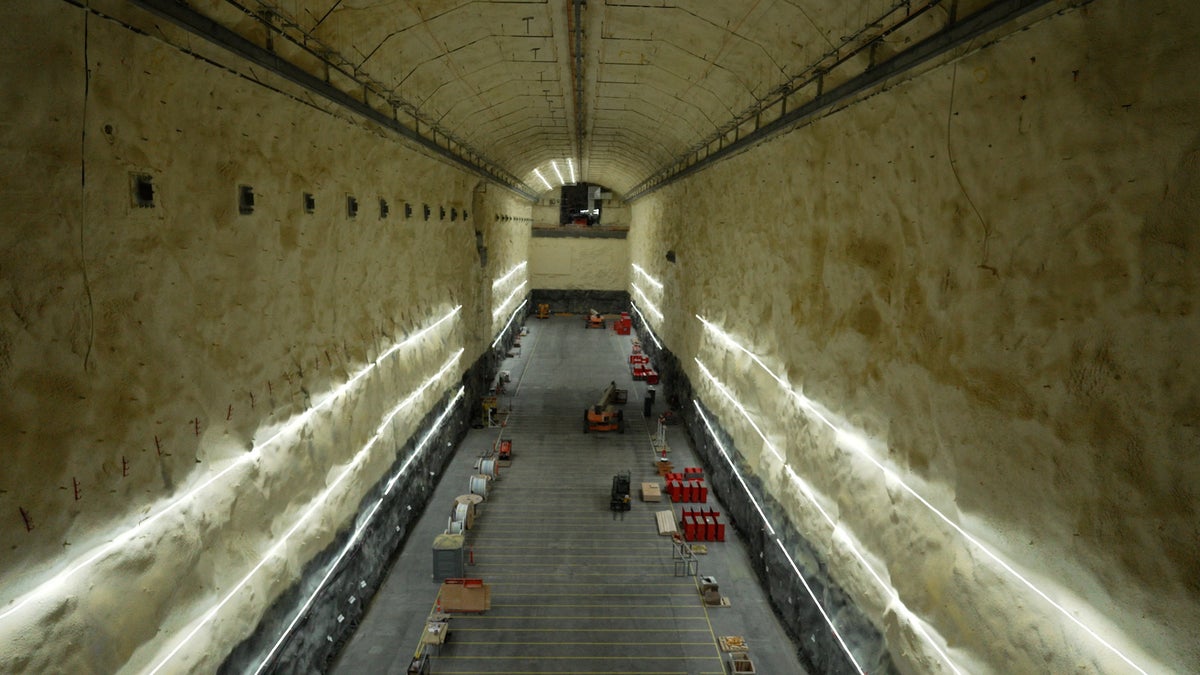
Construction has begun on the Deep Underground Neutrino Experiment (DUNE), a multibillion-dollar Department of Energy facility one mile beneath Lead, South Dakota. The project will detect neutrinos—nearly massless particles that pass through matter with minimal interaction—beamed from a lab three states away in Illinois. Physicists hope DUNE will resolve fundamental gaps in the Standard Model, including the ordering of neutrino masses and their potential role in explaining why matter dominates over antimatter in the universe. The first steel beam was signed by project leaders and government officials at a ceremony this week; the 10 million pounds of steel for the first detector vessel came from CERN in Europe. Thirty-eight countries are collaborating on what researchers call a two-decade dream finally becoming real.
Neutrinos are shape-shifting particles that come in three "flavors." The matter-antimatter asymmetry of the universe—why anything exists at all—may hinge on neutrino properties. DUNE's depth shields detectors from cosmic ray interference.
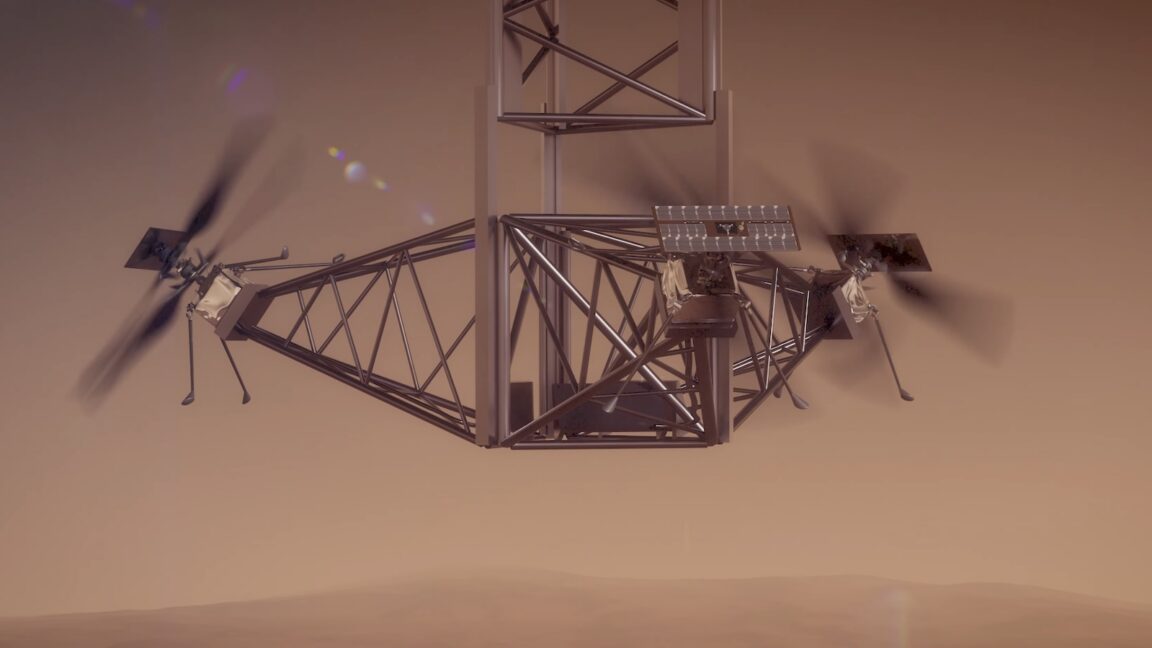
NASA engineers have successfully tested rotor blades spinning faster than the speed of sound in a simulated Martian atmosphere, clearing a path for the next generation of Mars helicopters. The Ingenuity helicopter, which crashed in January 2024 after 72 flights, was limited to Mach 0.7 to avoid blade disintegration fears. The new SkyFall mission helicopters—larger, heavier, and designed to carry payloads—will need supersonic rotor speeds to generate sufficient lift in Mars's thin atmosphere, just 1% of Earth's density. In tests at JPL, rotor tips reached Mach 1.08 without damage, surprising engineers who had shielded the chamber with sheet metal in case of catastrophic failure. The breakthrough enables three helicopters scheduled for launch as soon as late 2028 aboard a nuclear-powered spacecraft.
Ingenuity's 2,700 rpm was already 10 times faster than Earth helicopters. SkyFall's larger rotors must spin even faster. The mission will use a novel heat-shield entry and self-landing maneuver to reach the surface.
Court documents from the Musk v. Altman trial reveal Microsoft executives' early anxieties about their OpenAI partnership. In January 2018, Microsoft CTO Kevin Scott warned CEO Satya Nadella that refusing OpenAI's funding requests risked having the startup "storm off to Amazon in a huff and shit-talk us and Azure on the way out." Scott noted OpenAI was "building credibility in the AI community very fast" and would become "an influential voice." The emails show Microsoft initially dismissed OpenAI's Dota 2 gaming research as an expensive stunt with unclear returns. Scott later admitted he had been "highly dismissive" of both OpenAI and Google DeepMind's game-playing efforts, changing his view only when OpenAI pivoted to natural language models. Microsoft announced its $1 billion investment a month after Scott's revised assessment.
The 2019 $1 billion investment evolved into a close partnership now fraying. OpenAI recently renegotiated to bring models to AWS, and former leaders have accused Sam Altman of sowing "chaos" and bypassing safety protocols.
Poland's economy has grown from post-communist ruin in 1989 to become the world's 20th largest, surpassing Switzerland with over $1 trillion in annual output. Per capita GDP reached $55,340 in 2025, or 85% of the EU average, up from $6,730 (38% of EU average) in 1990—roughly matching Japan today. The transformation rests on rapid institutional development including independent courts, anti-monopoly enforcement, and banking regulation that prevented oligarchic capture seen elsewhere in Eastern Europe. EU membership in 2004 brought billions in aid and single-market access. Poland has grown 3.8% annually since joining, double the European average. The Trump administration has invited Poland to the G20 summit as a guest, recognizing its rise though full membership would require consensus among existing members.
Poland's consensus across the political spectrum on EU integration provided direction. Unlike neighbors where privatization enriched connected insiders, Poland's institutional safeguards preserved competitive markets. The G20 invitation is symbolic—no guest has become a full member since 1999.
A study of tens of thousands of essays at a selective college found that low-income applicants—identified by fee waivers—were more likely to use AI in their admissions essays, and more likely to be rejected even when they did. The research from Cornell and Carnegie Mellon also showed that essay language became significantly more homogeneous after AI tools emerged in 2022, with the strongest convergence among lower-income and rejected students. The authors suggest wealthier students have access to better AI tools, counselors, and essay coaches who understand how to use them effectively, while low-income students may rely on free tiers producing lower-quality output. The findings raise concerns that AI is eroding the essay's purpose: showcasing individual, idiosyncratic experiences that distinguish applicants.
About half of applicants now use AI for brainstorming and one in five for first drafts, per a 2024 survey. Previous Cornell research found AI-written essays generic and easy to spot. The study argues admissions offices should account for wealth disparities in evaluating AI-assisted writing.
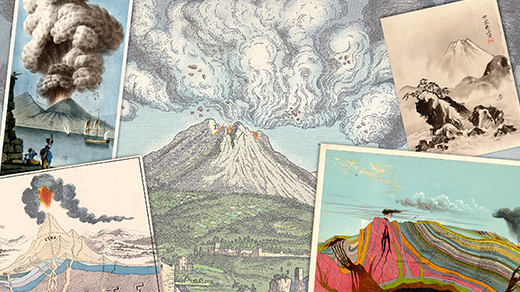
Volcanologists saved 250,000 lives during the 1991 Pinatubo eruption through rapid assessment and evacuation, but their forecast was educated guesswork rather than precise prediction. Unlike weather, which can be forecast two weeks ahead, volcanoes present a harder problem: they do not continuously operate, and critical pre-eruption signals may unfold over years or decades between events. Advances since Pinatubo include better instrumentation, machine learning for data interpretation, and improved understanding of magmatic plumbing systems. Some researchers are optimistic that probabilistic forecasting—estimating eruption likelihood with specific characteristics—may eventually approach weather-like precision. The comparison matters: 800 million people live within 100 kilometers of active volcanoes, and rare large eruptions can affect global climate patterns.
The 1991 Pinatubo evacuation was ordered days before a cataclysmic explosion based on geological assessment showing the volcano "only erupts big." Machine learning now helps process monitoring data, but the fundamental challenge remains sparse data from infrequent events.
There is reason for skepticism about current assessments of Iran's military capabilities, argues this National Review analysis. The piece examines whether intelligence community projections about Iranian missile programs, nuclear advancement, and regional military capacity have been consistently accurate or subject to the same overestimation patterns seen in past assessments of adversary states. The authors note that politicized intelligence and analytical bias have historically distorted threat evaluations, with consequences for policy decisions. The assessment calls for careful scrutiny of claims about Iran's operational readiness and technological progress, particularly as these inform decisions about military escalation and diplomatic leverage. The analysis arrives as the US and Iran remain in armed conflict over the Strait of Hormuz and nuclear negotiations stall.
Intelligence assessments of Iraq's WMD programs and Soviet military capacity later proved significantly overstated. Similar questions now surround Iran's actual versus declared nuclear enrichment levels and missile accuracy.
Researchers at OpenAI and collaborating institutions used a collaborative version of Battleship to test how well AI models make efficient decisions with limited information. In the game, one player asks questions about hidden ship locations while another answers, working together to sink vessels in minimum moves. Initially, human players consistently outperformed Meta's Llama-4-Scout, while OpenAI's GPT-5 beat both. The researchers then optimized models using principles from Bayesian experimental design—maximizing information gain per question and looking ahead one turn. When players communicated via code snippets rather than natural language, the optimized Llama-4-Scout beat GPT-5 two-thirds of the time at one-hundredth the cost, and surpassed humans by seven moves on average. The approach may transfer to real scientific decisions about which hypotheses to pursue when experiments are expensive or time-consuming.
Bayesian experimental design uses prior assumptions to estimate event likelihoods and optimize information gathering. The study's lead author, Valerio Pepe, now at OpenAI, developed the framework before joining the company. Code-based communication reduced natural language ambiguity.