The U.S. Department of Education's Office for Civil Rights opened a Title IX investigation into Smith College on Monday, targeting the private all-women's institution for admitting transgender women and allowing them access to women-only spaces. The probe marks an escalation in the Trump administration's campaign against gender-inclusive policies at colleges and universities. Smith, located in Northampton, Massachusetts, has maintained a policy of admitting transgender women since 2015. The investigation signals broader federal pressure on single-sex institutions that have updated admissions criteria to include trans students. The Education Department did not specify what enforcement actions it might seek, but Title IX investigations can result in loss of federal funding for institutions found noncompliant.
Smith College is one of the Seven Sisters, a consortium of historically women's colleges in the Northeast. The college updated its admissions policy in 2015 to explicitly welcome applications from transgender women. Title IX prohibits sex-based discrimination in federally funded education programs; the Trump administration has reinterpreted this to exclude gender identity protections.
Sam Altman and other AI leaders have shifted from warning that AI will eliminate most jobs to claiming it will create new ones. OpenAI's 2026 principles mention AGI twice versus twelve times in 2018, and the company removed AGI clauses from its Microsoft contract. Nvidia's Jensen Huang and venture capitalist Marc Andreessen have joined the chorus, attacking the job-loss narrative. The pivot coincides with polling showing Americans turning sharply against AI, with independents particularly hostile. Both Bernie Sanders and Donald Trump have begun framing AI as a threat requiring political response. The industry faces a credibility problem: its earlier predictions of mass obsolescence and species-level risk now complicate its pivot to optimism.
OpenAI's mission statement still defines AGI as systems that outperform humans at most economically valuable work. Altman wrote in 2021 that labor prices would fall toward zero; by 2024 he predicted humans would find new things to do that may not resemble current jobs.
MIT scientists used the James Webb Space Telescope to analyze a mini-Neptune orbiting inside the path of a hot Jupiter 190 light-years from Earth, the first such atmospheric measurement ever made. The mini-Neptune's heavy atmosphere, rich in water vapor, carbon dioxide, and sulfur dioxide, could not have formed so close to its star. The findings suggest both planets originated beyond the system's frost line, where ice and volatiles accumulate, then migrated inward together while retaining their atmospheres. The discovery confirms that mini-Neptunes, the most common planet type in the galaxy, can form in cold outer regions before moving inward. The system, TOI-1130, was first identified in 2020 by MIT researchers using NASA's TESS satellite.
The frost line marks the distance from a star where temperatures drop enough for water to freeze. Mini-Neptunes are gas dwarfs with rocky cores, smaller than Neptune but larger than Earth. No mini-Neptune exists in our solar system, though they are the most frequently detected exoplanet type.
Springer Nature retracted a widely cited meta-analysis claiming ChatGPT improves student learning outcomes, citing discrepancies in the analysis and loss of confidence in the conclusions. The paper, published in May 2025, had accumulated 504 citations and nearly half a million readers, with social media amplification stripping away methodological caveats. Researchers noted the study synthesized incompatible findings from studies with divergent methods, populations, and timeframes, and that high-quality research on ChatGPT's educational effects could not plausibly have been conducted, reviewed, and published in the available window. The retraction highlights how rapid AI hype can outpace rigorous evaluation, with questionable findings spreading faster than corrections.
The retracted paper analyzed 51 studies to calculate effect sizes between experimental groups using ChatGPT and control groups. Meta-analysis combines results from multiple studies but requires comparable methodologies and outcomes to produce valid conclusions.
GameStop offered $55.5 billion to acquire eBay, a company worth roughly four times its own market capitalization, in a bid CEO Ryan Cohen claims would combine eBay's online marketplace with GameStop's 1,600 U.S. stores for authentication and fulfillment. The proposal envisions store staff verifying items for eBay listings and stores doubling as broadcast studios for live commerce. Cohen told CNBC the deal would be half cash, half stock, with financing from TD Securities, but could not explain how to close a $16 billion gap between available resources and the offer price. GameStop's revenue has fallen from $6 billion in 2021 to $3.6 billion in 2025, with hundreds of store closures. eBay shares rose 5 percent on the news; GameStop shares fell 2 percent.
Ryan Cohen became GameStop chairman in 2021 during the meme-stock surge that briefly sent shares above $300. He owns approximately 9 percent of the company and receives no salary. GameStop closed about 470 U.S. stores in early 2026 after closing 590 in 2024.
The fragile cease-fire between the United States and Iran appears to be deteriorating as initial skirmishes suggest a return to combat operations may be imminent. Iranian Foreign Minister Abbas Araghchi warned the U.S. and United Arab Emirates against pursuing military solutions while claiming talks are progressing, a statement that follows U.S. military escorts of commercial vessels through the Strait of Hormuz. The contradiction between diplomatic rhetoric and military positioning on both sides points to a framework that neither party fully accepts or trusts. The piece argues that the current pause in open hostilities rests on unstable foundations and that the early signs of renewed conflict have already begun to appear.
The Strait of Hormuz handles roughly one-fifth of global oil shipments. The U.S. began military escorts of commercial vessels through the strait following Iranian threats to shipping. Previous U.S.-Iran cease-fires have collapsed due to mutual accusations of violations.
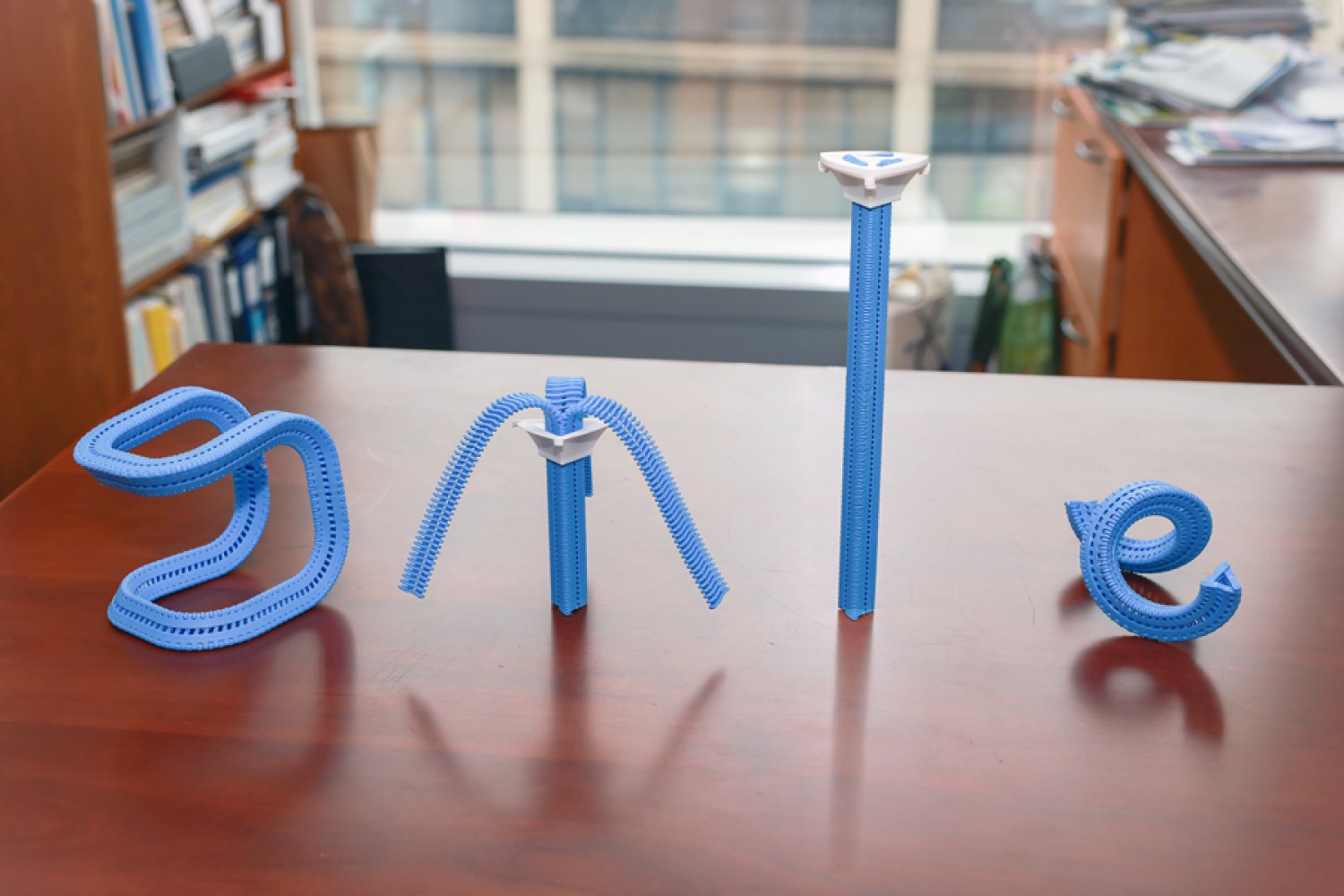
MIT CSAIL researchers have built a functional three-sided zipper based on a 1985 patent by professor William Freeman, creating fasteners that can transform objects between flexible and rigid configurations at the push of a button. The Y-zipper uses automated design software and 3D printing to produce customizable three-sided fasteners that can be embedded in camping gear, medical devices, robots, and art installations. Applications include tents that pitch in 80 seconds rather than six minutes, wrist casts that loosen during the day and tighten at night, and robotic quadrupeds that adjust leg height for terrain. The mechanism relies on triangular geometry where a slider fastens three strips into a tube, straightening them into a rigid structure when closed.
Freeman's 1985 proposal to the Innovative Design Fund was rejected; he patented the prototype and stored it for nearly 40 years. The CSAIL team developed automated fabrication tools that Freeman lacked, enabling practical production of the previously theoretical design.
Research from Internet Matters found that 46 percent of UK children consider age verification checks easy to bypass, with methods including fake birthdays, borrowed ID cards, video game characters for selfie systems, and even drawn-on mustaches to fool facial recognition. Nearly a third of children admitted to circumventing the checks, while 17 percent of parents actively helped and 9 percent ignored it. The findings come months after the UK's Online Safety Act mandated stronger age verification for platforms hosting adult content. Despite the rules, 49 percent of surveyed children reported encountering harmful content online recently. The report suggests the regulatory framework fails to account for parental complicity and the adaptability of young users in evading technical controls.
The Online Safety Act requires platforms to implement age assurance systems to prevent minors from accessing harmful content. Ofcom, the UK regulator, has faced criticism from charities for insufficient enforcement against violators.
Senators Adam Schiff and Mike Rounds introduced bipartisan legislation to fund AI literacy programs in K-12 schools through National Science Foundation grants, with backing from OpenAI, Google, and Microsoft. The LIFT AI Act would support curriculum development, teacher training, and evaluation methods for teaching students to use AI effectively, interpret outputs critically, and mitigate risks. The bill arrives as the NSF faces significant funding cuts under the Trump administration. The legislation defines AI literacy as age-appropriate knowledge for problem-solving in an AI-enabled world. Critics note that teachers and students already express frustration with AI integration in classrooms, raising questions about whether additional mandated curriculum will address underlying pedagogical challenges or add to them.
The National Science Foundation has endured substantial budget reductions under the current administration. The bill would direct the NSF director to award competitive, merit-reviewed grants to higher education institutions and nonprofits for AI literacy program development.
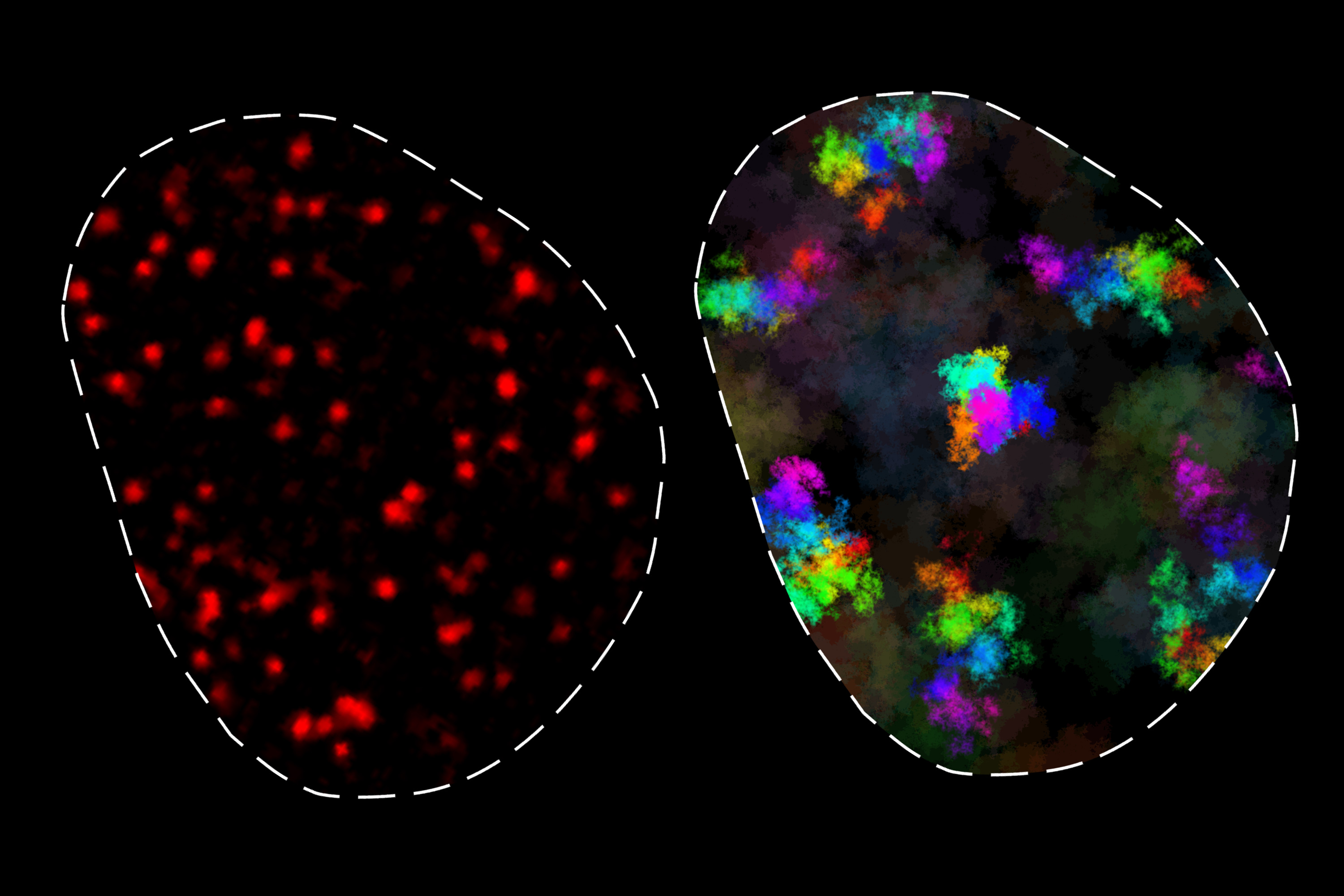
MIT researchers measured chromatin dynamics across timescales from microseconds to hours, revealing two distinct motion categories that govern how genes interact with distant regulatory elements. One state constrains chromatin to neighboring genomic regions; the other permits longer-range contacts over extended periods. The findings, published in Nature Structural and Molecular Biology, explain how DNA repair and gene regulation function in the crowded nuclear environment. Chromatin, the complex of DNA and proteins, must move to bring genes together with enhancers that can sit a million base pairs away. The team used advanced microscopy to track these nanometer-scale movements with statistical precision previously unattainable, showing that polymer physics constrains but does not prevent the contacts essential for cellular function.
Chromatin was traditionally depicted as static in textbooks but is constantly in motion. Subdiffusive movement describes how DNA loci are pulled back by neighboring nucleotides after displacement, like running while holding hands in a chain.