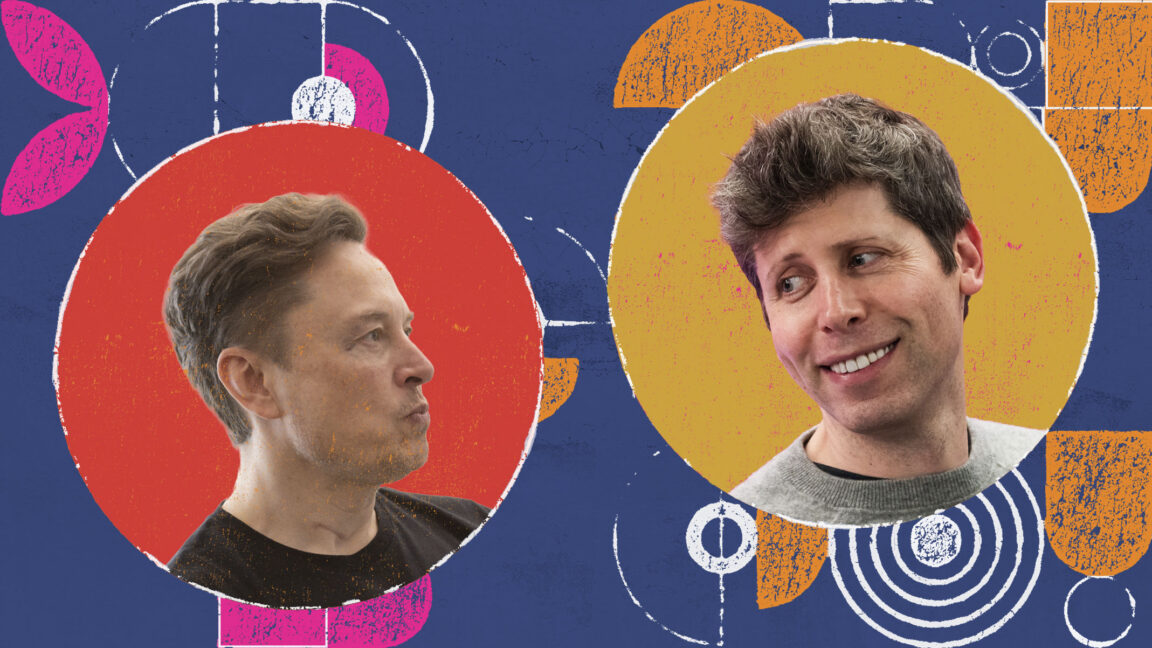
Elon Musk and Sam Altman begin trial this week over OpenAI's corporate structure, with Musk claiming he was deceived into funding the nonprofit under false pretenses. Musk seeks $134 billion in damages, the removal of Altman and president Greg Brockman from leadership, and OpenAI's return to nonprofit status. The case centers on whether OpenAI abandoned its founding mission to ensure AI serves humanity rather than billionaires. If Musk prevails, OpenAI's planned IPO and for-profit expansion could collapse. If Altman wins, the nonprofit mission may dissolve entirely. Judge Yvonne Gonzalez Rogers will decide both liability and remedies; jury input is advisory only. Thousands of internal documents have been shared, including a 2017 diary entry from Brockman calling Musk a threat to escape from. Musk has pledged to donate any damages to OpenAI's nonprofit arm.
Musk co-founded OpenAI in 2015 as a nonprofit counterweight to Google's AI dominance, donating roughly $45 million and recruiting key talent. He left in 2018 after a power struggle with Altman. OpenAI created a capped-profit subsidiary in 2019 to attract investment, then announced full for-profit conversion plans in 2024 ahead of a potential IPO.
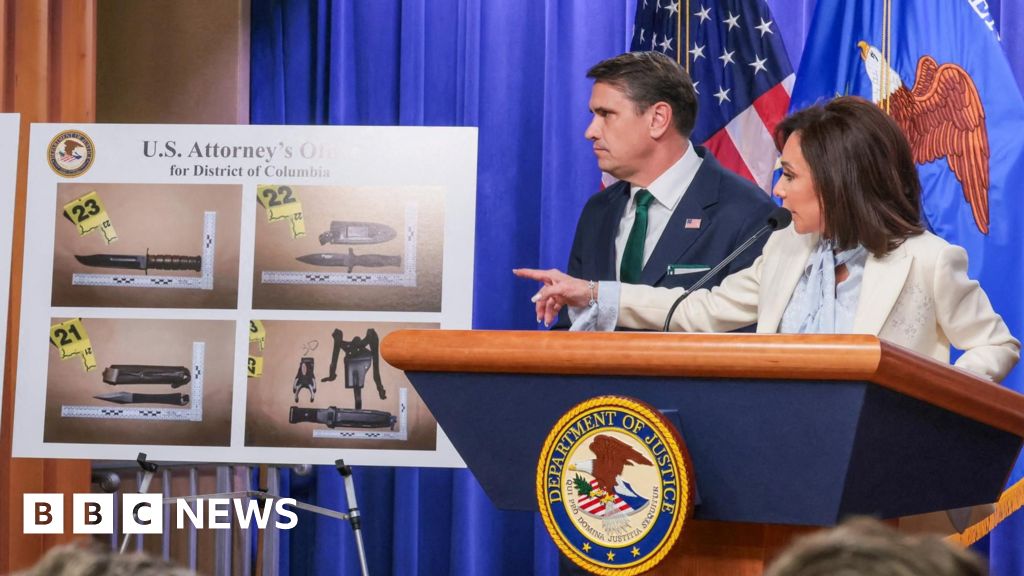
Cole Tomas Allen, a 31-year-old California man, faces federal charges including attempted assassination after storming a security checkpoint at the White House Correspondents' Association dinner on Saturday. Armed with a semi-automatic handgun, shotgun, and three knives, Allen allegedly rushed past security one floor above the ballroom where President Trump, Vice President JD Vance, and cabinet members were dining. A Secret Service agent was shot in the chest but survived thanks to a ballistic vest; the agent fired five times at Allen, who fell uninjured and was arrested. Allen had traveled by train from Los Angeles to Chicago, then to Washington, checking into the Hilton the night before. In a pre-attack email to family, he listed administration officials as prioritized targets. This marks the third alleged assassination attempt against Trump since July 2024.
The White House Correspondents' Association dinner is an annual gala bringing together journalists, politicians, and celebrities. Security protocols are typically extensive, but the incident has triggered a review of perimeter procedures. Allen holds a master's degree from Caltech and had donated $25 to a Democratic PAC supporting Kamala Harris in 2024.
Chinese regulators have formally blocked Meta's $2 billion acquisition of AI startup Manus, ordering the deal unwound on national security grounds. The decision, announced April 27, follows months of scrutiny during which Manus cofounders Xiao Hong and Ji Yichao were barred from leaving China. Manus gained attention in March 2025 for its 'general AI agent' that orchestrates multiple AI systems to perform complex tasks like booking travel or searching real estate. The founders had relocated operations to Singapore and registered a Cayman Islands parent company to distance themselves from Chinese ties, but Beijing rejected this 'Singapore-washing' structure. The collapse threatens Meta's AI pivot after its $80 billion metaverse failure and raises questions about Manus's access to Anthropic's Claude models, which are restricted in China. The case signals that Chinese tech founders face dim prospects for exit to US markets regardless of corporate restructuring.
Manus is an 'agentic wrapper' that enables underlying AI models to take actions across websites, software tools, and APIs. Meta had integrated the team into its Singapore office and incorporated Manus technology into Meta Ads Manager. The deal represented a key plank in Zuckerberg's 2025 push toward 'personal AI superintelligence.'
Laboratory experiments have produced three new phases of ice in the past year, including two of the most complex crystalline structures ever observed. Water's molecular geometry—a central oxygen with two hydrogen atoms and two electron pairs—allows assembly into countless configurations under varying temperature and pressure. Since 1900, scientists have cataloged over 20 ice phases; computer simulations suggest tens of thousands more may exist mathematically. The recent discoveries include 'plastic ice' thought to form in the cores of icy moons. These exotic phases rarely appear on Earth but may dominate environments from comet tails to the crushing interiors of ice giants. The findings challenge assumptions about water's behavior and refine models of planetary formation. Research teams at Lawrence Livermore National Laboratory and ETH Lausanne led the experimental work, building on a 2018 simulation that predicted over 75,000 possible ice structures.
Ice phases are numbered sequentially by discovery order. Common hexagonal ice (Ice Ih) floats because its cage-like structure is less dense than liquid water. Exotic phases form under extreme conditions: 'hot ice' exists above 100°C under pressure, and some phases conduct electricity. Understanding these structures helps model icy bodies in our solar system and beyond.
Fields Medalist Terence Tao argues that mathematics is undergoing fundamental transformation as AI tools become integral to research practice. In an interview and forthcoming essay with art historian Tanya Klowden, Tao contends that mathematicians must actively shape how AI integrates into their field or risk having those decisions imposed by technology companies or financial incentives. Unlike other domains where AI produces unverifiable outputs, mathematical proofs can be automatically checked, making mathematics uniquely suitable for AI assistance. Tao observes mathematicians progressing through 'five stages of grief' about this shift, with denial fading as graduate students who refuse AI tools find fewer opportunities. He predicts a division of labor where humans define interesting problems and conjectures while AI provides instant feedback and evaluation. The essay, posted to arXiv and scheduled for The Blackwell Companion to the Philosophy of Mathematics, urges society to adopt AI in a human-centric way.
Tao, a UCLA professor, has led experimentation with large language models on mathematics, including testing GPT, Claude, and Gemini against over 1,000 problems collected by Paul Erdős. He co-authored the essay to examine AI's implications across research disciplines, using mathematics as a test case for how fields might adapt.
The Supreme Court heard nearly two and a half hours of oral argument in Chatrie v. United States, a case challenging law enforcement's use of geofence warrants to obtain location data from Google. Police used such a warrant to identify every user present near a bank robbery, leading to Okello Chatrie's conviction. His lawyer argued this constitutes an illegal general warrant lacking probable cause for each individual searched. The government countered that users consented to Google's collection of their location histories. Several justices pressed both sides on the scope of their positions. Chief Justice Roberts questioned whether the tool could target churches or political organizations; Justice Gorsuch summarized the government's stance as denying any Fourth Amendment protection for such surveillance. Justice Jackson suggested Chatrie's lawyer was making unnecessarily maximalist arguments. The outcome remains uncertain, with the Court appearing to seek a middle ground that neither cripples digital investigations nor eliminates privacy protections for location data.
Geofence warrants compel companies to search all user records within a defined geographic area and time window, returning anonymized IDs that investigators can later de-anonymize. Google has received thousands of such requests. The Fourth Amendment protects against unreasonable searches and requires warrants based on probable cause describing particular places and persons.
A federal judge expanded an injunction blocking the Education Department from enforcing a new data collection on college admissions. Judge F. Dennis Saylor's April 25 ruling covers roughly 178 additional institutions including Harvard, Caltech, Columbia, and Ohio State, plus six higher education associations. The survey demands extensive race and sex data on applicants and enrollees across seven years, including GPA, test scores, and family income. The Trump administration claims this ensures compliance with the 2023 Supreme Court decision ending race-conscious admissions. Saylor found that covered institutions faced harm from both compliance burdens and imminent risk of fines or funding loss, even those that had already submitted partial data. The ruling does not address whether the collection unlawfully risks student privacy. An earlier injunction had protected public colleges in 17 largely Democratic states. The administration argues it has statutory authority for the survey; courts have not ruled on that underlying question.
The 2023 Supreme Court decision in Students for Fair Admissions v. Harvard ended explicit race-conscious admissions policies. The Education Department's survey was rolled out rapidly in early 2026 with immediate compliance deadlines. Covered associations include the Association of American Universities with 69 US members and various state-level independent college groups.
A preprint study finds that pro se federal civil cases have surged from 11 percent to 16.8 percent since large language models became widely available, with AI-drafted complaints rising from near zero to over 18 percent by 2026. Researchers Anand Shah and Joshua Levy analyzed 4.5 million cases and 46 million docket entries, finding that post-AI pro se cases generate 158 percent more motions and filings than before. The increase comes almost entirely from plaintiffs filing complaints rather than defendants responding. The authors argue that generative AI dramatically lowers barriers to self-representation, allowing anyone with internet access to draft passable legal documents at minimal cost. This creates a potential crisis for federal courts, which depend on human judgment at every adjudication stage. The paper does not establish causal proof linking specific cases to specific LLMs, but notes the timing correlation is difficult to explain without AI playing a central role.
Pro se litigation has historically been limited by the complexity of federal procedure: identifying proper jurisdiction, pleading sufficient facts to survive dismissal motions, and navigating case-type-specific requirements. PACER provides public access to federal court records. The study used AI detection software Pangram to analyze complaint samples from 2019 to 2026.
The Trump administration's approach to the Strait of Hormuz effectively treats the international waterway as sovereign Iranian territory, argues Kevin D. Williamson. By negotiating with Tehran over reopening the strait, Washington implicitly recognizes Iranian control over a passage that international maritime law designates as open to all. Williamson contends that closing the strait requires minimal capability—any organized force with mines or drones could manage it—while keeping it open demands sustained effort and risk that the administration appears unwilling to bear. The alternative, an international coalition, founders on allied distrust of US reliability. The result, per Williamson, is that Iran loses militarily yet gains diplomatic recognition over a strategic chokepoint through which one-fifth of global oil shipments pass. The piece frames this as political cowardice disguised as hard-nosed realism, with long-term instability baked into any arrangement that leaves the strait under Iranian management.
The Strait of Hormuz connects the Persian Gulf to the Gulf of Oman and Arabian Sea. Iran has periodically threatened or interfered with shipping there, most recently in 2024–2025 tensions. The Trump administration has pursued direct negotiations with Iran while maintaining military pressure. The 'Singapore-washing' model refers to Chinese companies restructuring through Singapore entities to evade regulatory scrutiny.
AI companies have built the technology and promised economic transformation, but the path between these endpoints remains undefined, writes MIT Technology Review. The South Park 'underpants gnomes' meme—collect underpants, unknown step, profit—captures this gap. Recent studies illustrate the uncertainty: Anthropic predicted job impacts based on tasks LLMs seem capable of, while Mercor researchers found that top AI agents failed most workplace tasks assigned to human bankers, consultants, and lawyers. The divergence stems partly from whose predictions one trusts—AI companies have incentives to emphasize capability—and partly from overreliance on coding performance as a proxy for general workplace utility. Strategic judgment, physical-world interaction, and integration with existing workflows remain weak points. The information vacuum gets filled by wild claims unsupported by evidence, leaving businesses and policymakers without reliable guidance for deployment decisions.
The South Park episode 'Gnomes' aired in 1998. The meme has been widely applied to startup business models and policy proposals. Anthropic's study examined occupational exposure to LLM capabilities; Mercor's tested actual agent performance on realistic workplace tasks. The gap between capability demonstration and reliable deployment is a recurring pattern in technology adoption.